by Keith | Apr 9, 2015 | Products
 Shaman’s Garden proudly offers Bali kratom leaf in two different forms, both as a powdered and a crushed kratom incense. Our kratom leaf incenses from Bali are plain leaf, without the addition of a kratom extract. You can make an extract from them or use them “as-is” in aromatherapy applications or as an incense. Bali kratom leaf is rising in popularity as the gold standard for kratom incense in Indonesia, where most commercial kratom farms are located.
Now for the basics: Bali kratom is a strain of Red Vein Kratom with darker reddish leaves. As a Red Vein variety, Bali kratom leaf is generally thought to have a more relaxing aura compared to the more energizing White Vein varieties. Despite the name, these days most Bali kratom is actually grown in Borneo, even though it was probably originally from Bali, a smaller island in the Indonesian archipelago. Why did the name Bali kratom stick?
One reason might be that most of the ports where Bali kratom is exported to the West are still located in Bali. As kratom becomes more internationalized, the names that once associated kratom strains with a specific country of origin, such as Thai Red Vein or Borneo White Vein, have become more fluid; strains that used to be found only in one area are now grown on farms in multiple regions of Southeast Asia, as well as in India and some Western countries. Now origin names for kratom are more likely to refer to the strain’s appearance and chemical properties than any specific region where it was grown.
As for Bali kratom leaf, in the kratom community this variety is thought to be a good starter strain for people who have never worked with kratom before. Although environmental and growing conditions can affect the chemical properties of the leaf, in general kratom from Bali has a well-balanced alkaloid content and tends to be relaxing when used in aromatherapy treatments. A good rule to remember is that Red Vein kratoms are generally thought to be relaxing while White Vein varieties and Maeng Da kratom are more energizing. All in all, Bali kratom leaf offers a pleasant balance and aroma at a quite affordable price.
by Keith | Mar 19, 2015 | Products
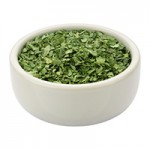 If you’ve ever perused our extensive selection of kratom products, you may have seen that we offer several varieties of kratom crushed leaf. If you’ve never seen this before on other websites, you may be wondering what exactly is kratom crushed leaf? And why would you buy it instead of a powder or other form of kratom? This little article is intended to give you a bit more information about crushed kratom leaf so you can decide on the product that suits your needs.
Basically, our kratom crushed leaf is made from coarsely ground kratom leaves. Also sometimes called “tea-cut” for its texture, which is reminiscent of loose-leaf tea, the crushed kratom leaf incense is one of several products we like to offer our customers, along with kratom powders, resins, and liquid extracts. However, our crushed kratom leaf products are not extracts—they are simply the unenhanced kratom leaf, conveniently crushed to make it easier to work with. You can buy any of the types of kratom we offer, from Thai Red Vein to Maeng Da, in either powdered or crushed leaf form.
Why Buy Crushed Kratom Leaf?
Whether you buy kratom as a whole leaf, powder, or crushed leaf is largely a matter of preference. Here are a couple reasons why someone might prefer the kratom crushed leaf to the powdered variety:
Price: Because crushed kratom leaves are less finely processed than kratom powder, they are correspondingly cheaper. Part of what you’re paying for with kratom powder is the extra processing by the manufacturer. If you’re willing to put the time in, you can take this extra step yourself and grind the coarse, “tea-cut” crushed kratom into a powder. There are a few different ways to do this: you can simply crush the leaves by hand or rub the coarse powder through a sieve, using a sheet of paper to collect the resulting powder. You can also grind the leaf pieces in a pepper mill or coffee grinder—just make sure your appliance is new or VERY clean to avoid contaminating residue. You’ll also want to clean the appliance thoroughly afterward.
Freshness: Crushed kratom leaves also present a smaller surface area to the air than the more finely micronized kratom powder. If you can get them, whole kratom leaves present an even smaller surface area. This can be important, especially if you think you might have to store your kratom for a while, because the alkaloid content in kratom will decrease over time as it’s exposed to oxygen. The less surface area exposed to air = the less area left for alkaloids to escape. Storing your kratom, in whatever form, away from exposure to sunlight, moisture, and oxygen will also help your kratom product last longer and stay fresher.
Ultimately though, buying kratom crushed leaf or kratom powder is largely a matter of preference, as these two forms of kratom will contain the same range of alkaloids. If you prefer a finer texture for an incense preparation, then powdered kratom is the way to go. But if you don’t mind putting in some extra effort and can spare the time to process your kratom—for instance, if you want to make your own kratom resin at home—then crushed kratom leaf is a very versatile and effective option.
by Keith | Mar 18, 2015 | Articles
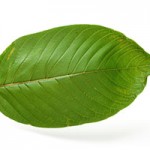 One of the most popular strains of kratom in cultivation, Rifat Kratom is a type of Thai Red Vein kratom originally bred by cloning wild trees. In fact, Rifat Kratom is one of the most highly prized of the cultivated varieties due to its high mitragynine content. We sell both the Rifat and Bumblebee Red Vein Kratom varieties as rooted cuttings for the aspiring exotic gardener. Many people find these particular strains to be the easiest and hardiest-growing types of kratom as well.
What does it mean when we say Rifat Kratom is a type of Red Vein? Kratom varieties come in several strains which are described by the color of the leaves’ central veins. Kratom leaves have central veins that can be green, white, or red to reddish purple. The different colors are thought to indicate a specific makeup of kratom’s major alkaloids—mitragynine, 7-hydroxymitragynine, and so on. Strains are further distinguished by origin: so you have Thai Red Vein, Malaysian Green Vein, Borneo White Vein, etc. Red Vein varieties are generally thought to have an alkaloid makeup that is more relaxing, while White Vein varieties are classed as energizing and Green Vein varieties are somewhere in between.
Rifat Kratom is a type of Thai Red Vein produced by cloning. It is named after Claude Rifat (Ree-FAH), a Swiss botanist who was the first to grow Rifat Kratom from seed as part of his research in Thailand. The parent plant is rumored to be the same one growing at Chulalongkorn University in Thailand whose leaves have been used in numerous research studies by Chiba University in Japan. Chiba University scientist Hitomitsu Takayama was among the first researchers to synthesize mitragynine in 1995.
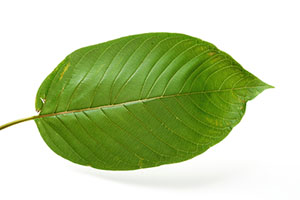
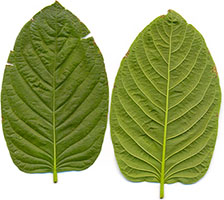
As might be expected from the “Red Vein” label, mature Rifat Kratom plants have leaves with red or reddish purple central and lateral veins (veins running from the central stem down the leaf). However, if you get a plant labeled Rifat Kratom whose veins appear to be white or green as it’s maturing, don’t jump to the conclusion you’ve been ripped off! Factors in the growing environment can definitely affect the color of kratom’s leaves. Also, when kratom plants are reaching maturity, the levels of alkaloids and other chemicals in the leaf are changing. This means that the leaf color may change quite a bit before the kratom has fully matured. Frequently, Red Vein varieties have green or white veins when young, only deepening to red or purple at maturity.
If you’re thinking of purchasing a young kratom cutting or kratom seeds to grow yourself, we recommend getting a Rifat Kratom if you can. This hardy, fast-growing kratom variety has remained the most popular strain of kratom in private non-commercial cultivation, not only because of its mitragynine content, but also because it’s widely regarded to be easier to grow than other strains of kratom. This might be in part because Rifat Kratom is a clone: the Rifat strain was specially bred from wild kratom trees to select for genetic traits that made it more likely to thrive in cultivation. These traits combine to make Rifat Kratom a fairly forgiving and rewarding strain of kratom to try growing on your own, even for first-time kratom growers!
by Keith | Feb 27, 2015 | Products
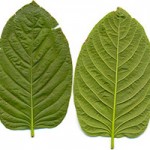 Of all the types of kratom currently available, probably none is more highly sought after than Maeng Da Kratom. However, one thing we’ve seen over and over in our years in the kratom business is that customers, even other vendors, can be confused about what the Maeng Da label actually means! We’ve seen Maeng Da kratom advertised as both a strain and a grade of kratom, but these are very different things. To make an analogy using one of our other favorite herbs, kava, there are both different strains or varieties of kava–Mahakea, Isa, Melo Melo, etc.—and different grades of kava. For instance, Waka kava is harvested only from the young lateral roots and is considered the finest grade of kava; however, any strain of kava can be harvested to make a Waka-grade kava.
It’s exactly the same with Maeng Da kratom: this label simply means that the product was made from kratom leaves that have been harvested at the peak of richness, in the fall or early winter when the leaves contain the highest concentration of alkaloids. Maeng Da Kratom is not a distinct strain of kratom any more than Waka kava is a distinct strain of kava. For many kratom connoisseurs, what sets Maeng Da kratom apart from other grades is its combination of both energizing and relaxing properties in one leaf; it’s great as a daytime incense for when you want to get focused, yet it also has a smooth, relaxing quality that can be great to unwind with. The name “Maeng Da” comes from a Thai slang term that means, loosely, “pimp’s kratom”—we’ll leave it to your imagination how this translates to quality!
Perhaps because it’s so highly sought after, various rumors have sprung up around Maeng Da kratom, including the wild theory that it’s a Genetically Modified Organism (GMO) created from a gene splice of different kratom strains. This is probably how the whole confusion with Maeng Da—is it a distinct strain or a grade of kratom?—got started in the first place: according to the Kratom Bible, a few years back an Indonesian kratom farm started experimentally grafting cuttings of various kratom strains to create an ultra-alkaloid-rich plant. However, according to the story, this original Maeng Da strain was not a GMO: instead, the farm was using much older grafting techniques that have been employed in horticulture to breed new varieties of many useful plants. The various types of apples available in your supermarket are mostly products of grafting.
Grafting takes advantage of a plant cell’s totipotency, a fancy term meaning that adult plant cells can be induced to diversify into any type of cell with the right chemical or physical stimulation (such as pruning, which induces the cut stem to proliferate cells that eventually produce new leaves). Supposedly, this Indonesian farm successfully grafted a cutting from one strain of kratom onto another strain and created a whole new variety of kratom, which they named Maeng Da. However, this original strain has now been lost. These days, Maeng Da kratom simply refers to any high-quality strain of kratom harvested at peak richness.
Working With Maeng Da:
We recommend Maeng Da incense only to those already experienced with kratom. As a rule, Maeng Da kratom is more alkaloid rich than other grades of kratom, so it often requires extra care when working with it. Here are some general pointers: when working with Maeng Da, estimate beforehand the smallest effective amount, and start with that first. Because Maeng Da is especially rich, as little as 1-2 g of unenhanced leaf is sufficient for most users. With enhanced Maeng Da extracts, this amount should be adjusted downward according to the strength of the extract. In general, we think it’s better to start with a conservative amount of any kratom strain the first time you use it, and titrate the amount upward if necessary.
Of course, the richness of Maeng Da kratom is another plus: it makes for a very economical grade of kratom, because you can use much less to achieve the same results. Shaman’s Garden sells this uniquely rich variety of kratom incense in multiple forms, including the original Maeng Da enhanced extract and our new “Gold” Maeng Da kratom incense, which has an almost silky feel and an extraordinarily smooth burn. Namaste!
by Keith | Jan 15, 2009 | Products
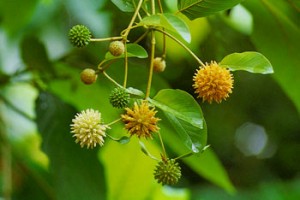 Both IAmShaman and ShamansGarden have been selling Kratom online for over a decade. We’ve seen it all; from the fake Kratom that appeared in the early 2000’s, to the next wave of research chemical infused Kratom that, when tested, had 0% mitragynine content. That’s never been the case here, as we not only source our Kratom from highly reputable vendors, we’ve manufactured our Kratom extracts in house since Day 001.
We’re also the only company we know if that regularly tests their Kratom products for purity and content. For example, in late 2014, we purchased Kratom extracts from 8 companies online, several of them the top selling Kratom vendors. Shockingly, 8 of those 10 companies either were selling Kratom extracts with 0% mitragynine content in them, or they had potentially dangerous research chemicals inside them to account for the popularity of those products.
Our Kratom leaf and extract is always a pure botanical, useful for a wide range of purposes. When we extract the crushed or powdered leaf into a botanical extract, it’s done with only purified water and ethanol. We never use acetone, butane, or any other potentially hazardous materials for any of our Kratom extracts. We also offer as wide a range of Kratom leaf as possible, to please every person’s personal preference.
Regardless, our sources have always remained constant, we respond to customer inquiries immediately, and we’re always here to help you make a choice of which Kratom products you purchase from us. And, something that many don’t often think about is the consistency of the Kratom product you purchase. Our stock is constantly rotating, so our Kratom leaf and extract is always as fresh as possible. Nothing sits in our inventory for more than a month or two, as we move through stock at a very consistent rate from month to month.
Also, by knowing our suppliers personally, by visiting the places the Kratom leaf is harvested, to where it’s processed and stored; we get to ensure the consistency and quality of each botanical specimen and extract we offer. With so many suppliers making so many promises, it can be difficult to know who to trust when choosing the vendor you plan to buy your Kratom from. We’ve been around longer than most, partly because of the great pride we take in the quality of our products, partly because of the stellar customer service we offer, and partly because we have unbeatable prices for just about everything we offer.
If you’ve got Kratom questions, please feel free to call us during normal business hours, or email us at shopkeeper at shamansgarden dot com or shopkeeper at iamshaman dot com. We like talking to customers and hope to hear from you today!

 Shaman’s Garden proudly offers Bali kratom leaf in two different forms, both as a powdered and a crushed kratom incense. Our kratom leaf incenses from Bali are plain leaf, without the addition of a kratom extract. You can make an extract from them or use them “as-is” in aromatherapy applications or as an incense. Bali kratom leaf is rising in popularity as the gold standard for kratom incense in Indonesia, where most commercial kratom farms are located.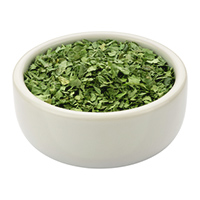
Recent Comments